
Zero Day Vulnerability
Defending the Unknown: The Architecture, Lifecycle, and Mitigation of Zero-Day Vulnerabilities Written by Md Safit Mia (Sifat)...

Defending the Unknown: The Architecture, Lifecycle, and Mitigation of Zero-Day Vulnerabilities
Written by Md Safit Mia (Sifat) | Cybersecurity Enthusiast
Published in July 28 2026
In cybersecurity and software engineering, few phrases strike fear into the hearts of SecOps teams faster than "Zero-Day Vulnerability."
When a security flaw is classified as a zero-day, it means developers and security vendors have had zero days to prepare, test, or distribute a patch. The threat actors are already exploiting the flaw in the wild, leaving defensive teams racing against time.
As a Senior Cybersecurity Engineer and Full-Stack Developer, I view zero-days not as mystical black-swan events, but as architectural, logic, or memory safety failures that require a robust Defense-in-Depth model to neutralize. In this comprehensive guide, we will break down the mechanics of zero-day vulnerabilities, analyze code-level attack vectors, and build modern detection and virtual patching strategies.
1. Anatomy of a Zero-Day Lifecycle
To defend against zero-day threats, you must first understand the timeline from discovery to mitigation.
 [ Software Release ]
          │
          ▼
 [ Vulnerability Discovered ] ─── (Discovered by Malicious Actor)
          │                                     │
          │ (Ethical / Internal)                ▼
          │                            [ Exploit Weaponized ]
          │                                     │
          ▼                                     ▼
 [ Responsible Disclosure ]            [ 0-Day Attacks Begin ] 🚨
          │                                     │
          │                                     │
          └──────────────────┬──────────────────┘
                             │
                             ▼
                 [ Vendor Notification ]
                             │
                             ▼
                   [ Patch Developed ]
                             │
                             ▼
                  [ Patch Deployed ]
- Discovery (t = 0): A researcher or attacker discovers an undocumented flaw (e.g., an unhandled memory pointer, logic bypass, or unescaped input stream).
- Exploitation: If discovered by threat actors, an exploit payload is crafted before the software vendor is aware.
- In the Wild Attack: The exploit is deployed against targets. Security Operations Centers (SOC) observe anomalous behavior or post-exploitation activities.
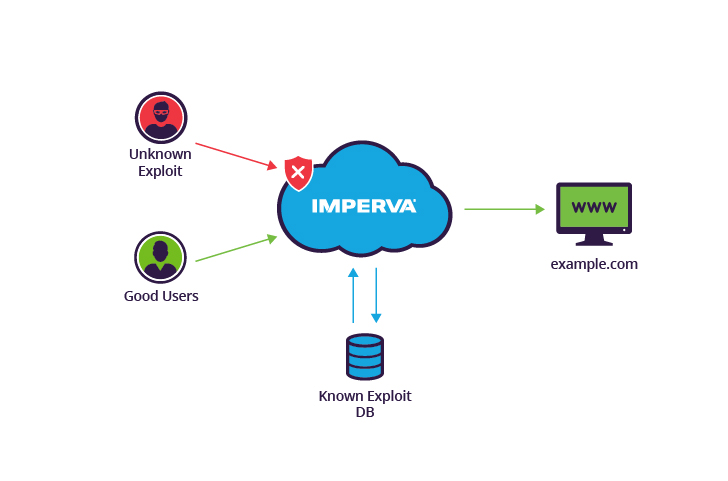
- Virtual Patching & Mitigation: Defense teams deploy network filters, WAF rules, or eBPF probes to block exploit vectors before an official vendor patch is released.
- Vendor Remediation: The vendor issues a CVE (Common Vulnerabilities and Exposures) and publishes a signed binary update or code patch.
2. Technical Deep Dive: Zero-Day Root Causes
Zero-day vulnerabilities generally fall into two broad architectural categories:
- Low-Level Memory Corruption (C/C++, Assembly): Buffer overflows, Use-After-Free (UAF), Out-Of-Bounds (OOB) Reads/Writes, and Integer Overflows.
- Application Logic & Input Sanitization Flaws (Web/Cloud): Insecure Deserialization, Remote Code Execution (RCE) via command injection, Server-Side Request Forgery (SSRF), and broken access controls.
Case Example 1: Low-Level Memory Unsafety (C-Language Heap Overflow)
Below is an abstracted C function vulnerable to a Heap Buffer Overflow—a classic zero-day vector used in privilege escalation and remote execution exploits.
// vulnerable_parser.c
#include <stdio.h>
#include <stdlib.h>
#include <string.h>

typedef struct {
    char packet_header[16];
    size_t payload_length;
    char *data_buffer;
} Packet;

void process_network_packet(char *raw_stream, size_t stream_size) {
    Packet *pkt = (Packet *)malloc(sizeof(Packet));

    // BAD PRACTICE: Reading length directly from untrusted input without validation
    memcpy(&pkt->payload_length, raw_stream, sizeof(size_t));

    // Allocating buffer based on client-controlled integer
    pkt->data_buffer = (char *)malloc(pkt->payload_length);

    // VULNERABILITY: If stream_size exceeds payload_length, heap corruption occurs
    // An attacker can trigger an Out-Of-Bounds Write to hijack function pointers on the heap.
    memcpy(pkt->data_buffer, raw_stream + sizeof(size_t), stream_size - sizeof(size_t));

    printf("[+] Packet processed successfully.\n");
    free(pkt->data_buffer);
    free(pkt);
}
The Secure Remediation (Safe Memory Allocation):
// secure_parser.c
#include <stdio.h>
#include <stdlib.h>
#include <string.h>

#define MAX_PAYLOAD_SIZE 4096

void process_network_packet_secure(const char *raw_stream, size_t stream_size) {
    if (stream_size < sizeof(size_t) || stream_size > MAX_PAYLOAD_SIZE) {
        fprintf(stderr, "[-] Security Violation: Malformed packet size.\n");
        return;
    }

    size_t declared_length = 0;
    memcpy(&declared_length, raw_stream, sizeof(size_t));

    // Strict boundary verification against actual stream payload
    if (declared_length > (stream_size - sizeof(size_t)) || declared_length > MAX_PAYLOAD_SIZE) {
        fprintf(stderr, "[-] Security Violation: Payload length mismatch.\n");
        return;
    }

    char *data_buffer = (char *)malloc(declared_length + 1);
    if (!data_buffer) return;

    memcpy(data_buffer, raw_stream + sizeof(size_t), declared_length);
    data_buffer[declared_length] = '\0'; // Null-terminate safely

    // Process safely...
    free(data_buffer);
}
3. Detecting Unpatched Exploits: Signature vs. Behavioral Detection
Since zero-day exploits do not have existing static signatures (such as known SHA256 hashes or CVE identifiers), traditional antivirus software fails. We must rely on Behavioral Analysis and Heuristic Detection.
Strategy A: Writing YARA Rules for Shellcode Payloads
When a zero-day targets a binary, the attacker often drops custom shellcode into memory. We can write YARA signatures to detect generic NOP sleds, syscall invocations, or encrypted loader stubs.
rule Generic_ZeroDay_Shellcode_Loader {
    meta:
        description = "Detects generic x86_64 shellcode injection patterns used in 0-day exploits"
        author = "Md Safit Mia (Sifat)"
        date = "2025-01-01"
        severity = "CRITICAL"

    strings:
        // Common 64-bit NOP Sled pattern combined with Stack Pivot instructions
        $nop_sled = { 90 90 90 90 90 90 90 90 90 90 }

        // Windows API lookup via PEB (Process Environment Block) walking
        $peb_lookup = { 65 48 8B 04 25 60 00 00 00 48 8B 50 18 48 8B 72 20 }

        // Direct System Call Invocation sequence
        $syscall_stub = { 48 89 CA 0F 05 }

    condition:
        uint16(0) == 0x5A4D and // Check for MZ Executable Header
        ($nop_sled and ($peb_lookup or $syscall_stub))
}
Strategy B: eBPF (Extended Berkeley Packet Filter) for Runtime Kernel Monitoring
At the OS/Linux kernel level, an exploit attempt usually manifests as anomalous process executions (e.g., nginx spawning /bin/sh). We can write Linux eBPF probes to catch this behavior in real time.
# ebpf_zero_day_monitor.py
from bcc import BPF

# eBPF Program running inside the Linux Kernel
ebpf_code = """
#include <uapi/linux/ptrace.h>
#include <linux/sched.h>

struct event_t {
    u32 pid;
    char comm[16];
    char filename[256];
};

BPF_PERF_OUTPUT(events);

int kprobe__sys_execve(struct pt_regs *ctx, const char __user *filename) {
    struct event_t event = {};
    event.pid = bpf_get_current_pid_tgid() >> 32;
    bpf_get_current_comm(&event.comm, sizeof(event.comm));
    bpf_probe_read_user_str(&event.filename, sizeof(event.filename), filename);

    // Flag suspicious interactive shell spawns from web/system daemons
    if (event.comm[0] == 'w' && event.comm[1] == 'w' && event.comm[2] == 'w') {
        events.perf_submit(ctx, &event, sizeof(event));
    }
    return 0;
}
"""

b = BPF(text=ebpf_code)
print("[*] Monitoring Kernel Syscalls for Suspicious Zero-Day Spawns...")

def print_event(cpu, data, size):
    event = b["events"].event(data)
    print(f"[ALERT] Zero-Day Exploit Suspected! PID: {event.pid} | Daemon: {event.comm.decode()} Executed: {event.filename.decode()}")

b["events"].open_perf_buffer(print_event)
while True:
    try:
        b.perf_buffer_poll()
    except KeyboardInterrupt:
        exit()
4. Virtual Patching with Web Application Firewalls (WAF)
When a zero-day vulnerability is announced in an open-source library or application framework (e.g., similar to Log4Shell or Spring4Shell), deploying a vendor patch across hundreds of microservices can take days.
Virtual Patching at the reverse-proxy or WAF level mitigates the exploit vector instantly without modifying application code.
Example: ModSecurity / HAProxy Rule against Insecure Deserialization
If an exploit relies on passing malicious Java/Python serialized objects or injected JNDI strings, a WAF rule can intercept it immediately:
# HAProxy Virtual Patch Directive against JNDI/RCE Zero-Day Vectors
frontend http_in
    bind *:443 ssl crt /etc/ssl/certs/app.pem
    mode http

    # Define HTTP Header & Query Body Inspection Rules
    acl contains_exploit_payload req.payload(0,0) -m reg -i (\$\{jndi:(ldap|rmi|dns|nis|iiop)://)
    acl contains_base64_rce req.hdr(User-Agent) -m reg -i (exec\(|system\(|passthru\(|eval\()

    # Block connection instantly before reaching backend service
    http-request deny status 403 if contains_exploit_payload
    http-request deny status 403 if contains_base64_rce

    default_backend application_cluster
5. Engineering Best Practices to Survive Zero-Day Vulnerabilities
To build software that is resilient against unknown threats, engineers must design systems around the principle of Assume Breach.
  ┌─────────────────────────────────────────────────────────────┐
  │                    DEVSECOPS PIPELINE                        │
  └──────────────────────────────┬──────────────────────────────┘
                                 │
     ┌───────────────────────────┼───────────────────────────┐
     ▼                           ▼                           ▼
┌──────────────┐          ┌──────────────┐          ┌──────────────┐
│  Shift-Left  │          │  Hardening   │          │  Zero Trust  │
│   Fuzzing    │          │  Environment │          │ Network Mesh │
└──────────────┘          └──────────────┘          └──────────────┘
1. Integrate Continuous Fuzz Testing (Shift-Left)
Don't wait for threat actors to find memory corruptions or edge cases. Integrate fuzzers (such as AFL++, LibFuzzer, or ClusterFuzz) directly into your CI/CD pipelines to discover unhandled execution paths automatically.
2. Enforce Compile-Time & OS Protections
Ensure your build toolchains leverage modern exploit mitigation flags:
- ASLR (Address Space Layout Randomization): Randomizes memory addresses.
- DEP / NX Bit (Data Execution Prevention): Prevents code execution on the stack and heap.
- CFI (Control Flow Integrity): Prevents indirect call redirection.
- Stack Canaries (
-fstack-protector-strong): Detects stack buffer overruns prior to execution.
3. Microsegmentation & Zero Trust Architecture
If a service falls prey to a zero-day RCE, proper container isolation limits the blast radius:
- Run containers as Non-Root (
USER 10001). - Enforce Read-Only Root File System (
readOnlyRootFilesystem: true). - Apply Seccomp profiles to restrict allowed system calls.
- Restrict egress network traffic using Kubernetes NetworkPolicies or Service Meshes (e.g., Istio).
Conclusion
Zero-day vulnerabilities represent the ultimate game of cat and mouse in cybersecurity. However, by understanding low-level memory mechanics, deploying behavioral detection engines, implementing rapid virtual patching, and enforcing DevSecOps principles, engineering teams can minimize their attack surface and withstand even the most sophisticated zero-day exploits.
Need assistance hardening your application architecture or building automated DevSecOps pipelines?
Explore my portfolio and get in touch via my blog platform.